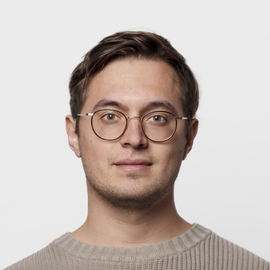
Arnaud Allemang--Trivalle
Doctoral Researcher in Computer Science
Max Planck Institute for Intelligent Systems
IMT Atlantique
Biography
Hello! I am a doctoral researcher at the Max Planck Institute for Intelligent Systems in Stuttgart and at IMT Atlantique in Brest, enrolled in the International Max Planck Research School for Intelligent Systems (IMPRS-IS).
When a team is working against the clock, the things that decide the outcome are rarely the things anyone is recording. Stress, workload, attention, and the quality of communication between people are all understood to matter, yet in a real operating room or on a real assembly line they mostly go unmeasured. My thesis, Multimodal Analysis to Understand and Enhance Team Performance in Time-Constrained Environments, is an attempt to close that gap.
The work runs in two directions. One is instrumentation: building wearable platforms that capture motion, physiological signals, and speech from every member of a team at once, and that clinicians and workers will still agree to put on once the novelty has worn off. The other is inference: turning those recordings into metrics for collaboration, situation awareness, and leadership that hold up outside the lab, and that someone can actually act on.
I am co-advised by Dr. Mathieu Chollet, Prof. Caroline G. L. Cao, and Prof. Katherine J. Kuchenbecker.
I am always glad to hear from people working on team dynamics, multimodal sensing, surgical data science, or human factors, and from clinicians and engineers who think their setting could use this kind of measurement. Collaborations, questions about the datasets, and speaking invitations are all welcome.
-
PhD in Computer Science, 2021 – present
IMT Atlantique & Max Planck Institute for Intelligent Systems
-
MSc Human and Biological Robotics, 2021
Imperial College London, Distinction 72.24/100 (US GPA 4.00/4.00)
-
M.Sc.Eng "Diplôme d'Ingénieur", 2021
IMT Atlantique (US GPA 3.64/4.00)
-
International Exchange Student Program, 2020
University of South Australia (US GPA 3.93/4.00)
-
Preparatory Classes (CPGE), MPSI – MP*, 2018
Lycée Janson-de-Sailly (US GPA 4.00/4.00)
-
Research Assistant (5 months), 2021
IMT Atlantique, Nantes, FR
-
Research and Development Engineering Intern (4 months), 2020
LS Group, Suresnes, FR
-
Assistant Project Manager Intern (1 month), 2019
Assistance Publique – Hôpitaux de Paris, Paris, FR
PhD Research
From modelling behaviour without data, to measuring it in the operating room, to validating it in the lab
I. Fatigue you cannot measure
With Airbus Central Research & Technology
Airbus wanted to know what putting robots on an assembly line would do to the people on it, rather than to the throughput. Fatigue was the thing nobody could measure, so we modelled it, and the model has been integrated into Airbus's design process.
Read moreShow less
Aircraft assembly is still largely manual, and the processes under the tightest quality requirements are the ones least amenable to automation.
We built a worker fatigue model driven by worker characteristics (skill, age, motivation), task characteristics, and level of automation, then integrated it into the system model those architects already used. Running a critical process from a new aircraft programme through two scenarios, fully manual and calibrated on historical production-line data against a simulated semi-automated alternative, produced fatigue trajectories alongside error rates, time lost, cost, and overall system resilience.
The contribution is less the model than its placement: it lets a human-factors question be asked in the same language, and at the same design stage, as the engineering ones. It also exposed the limit of the approach. Without objective measurement from the floor, the model can only be as good as the literature it was built from. That limitation is what the next chapter exists to fix.
→ Modeling Fatigue in Manual and Robot-Assisted Work for Operator 5.0 · Human Model For Industrial System And Product Design In Industry 5.0
II. Instrumenting the operating room
With the BOPA Innovation Chair
Surgical outcomes get attributed to the surgeon, but it is the team's coordination that tracks with serious harm. Surg-STAMPS is the platform we built to measure it: movement, physiology and speech from every member of the team at once, during real operations.
Read moreShow less
Reviewing intraoperative recordings from fifteen elective liver resections, we catalogued 154 human errors and 42 adverse events. All but one of the major events were associated with a human error, and it was failures of recognition, rather than lapses of attention, that tracked with serious harm.
Measuring that at scale needs instrumentation a surgical team will actually tolerate. Surg-STAMPS uses cap-mounted motion trackers, sensor-embedded garments, and mask-mounted microphones, compatible with a sterile field and synchronised with the operating-room black-box systems already installed. Across fifteen real procedures and thirty participants it proved acceptable in practice, and a detailed case study of an open right hepatectomy recovered stress, workload, and communication signatures that separate by surgical phase and by clinical role.
Whether such systems are deployable at all is a separate question, so we asked it directly. A nationwide survey of 831 French anaesthesia professionals, surgical professionals, and patients found broad support, with 84.8% of patients in favour, running alongside unresolved concerns about privacy and the strain of constant monitoring.
→ Surg-STAMPS · A nationwide survey on recording in the OR · Surgical data science and intraoperative error
III. Who becomes the leader?
Ongoing · Max Planck Institute for Intelligent Systems
Put four strangers in a room with a hard problem and a deadline and, within minutes, someone is leading. Nobody voted. Puzzle-STAMPS is a 143-participant dataset built to find out whether that emergence is legible in behaviour, and if so, in which behaviour.
Read moreShow less
The operating room gives you realism but almost no control. This chapter trades one for the other. Puzzle-STAMPS covers 143 participants across 36 teams working a time-constrained puzzle box of thirteen physical puzzles in eight timed segments, spanning visual search, decoding, and manipulation, with a hint system that keeps teams progressing at comparable rates while leaving room for different ways of organising themselves.
Seventy-six hours of synchronised recording across nine modalities, including head and torso motion, cardiac and respiratory signals, oxygen saturation, temperature, per-person audio, and multi-angle video, sit alongside puzzle-progress logs and psychometrics covering personality, workload, cohesion, and leadership.
It is built to support work on leadership emergence, team-performance prediction, interpersonal synchrony, coordination breakdown, and robust fusion when modalities drop out mid-session. This chapter is a collaboration with Dr. Ksenia Keplinger and the Organizational Leadership and Diversity group. The first-author paper is still being written.
→ Puzzle-STAMPS dataset · Inclusion, Identity, and Impact · The Role-Sensitive Nature of Gaze
Master's Research
Before the PhD, at Imperial College London
Learning to use a third arm
2020–2021 · Imperial College London
Supernumerary robotic limbs promise to let one person carry out work that normally takes two. The obstacle turns out to be the operator rather than the hardware, and how you structure the practice changes what people end up learning.
Read moreShow less
Trimanual control has no analogue in ordinary movement, so it was unclear how, or how quickly, people acquire it.
Working with Dr. Etienne Burdet, we trained two groups of twelve participants in virtual reality over five weeks. One group practised tasks with three independent goals, the other a single goal demanding all three limbs in concert. Both groups improved sharply, but the gains diverged: independent-goal training yielded measurably more efficient motion and lower subjective workload, while coordinated-goal training produced neither. On a separate transfer test using a gamified trimanual task, that advantage washed out and both schemes improved capability about equally.
How you structure trimanual practice, then, appears to matter less for whether people learn than for what they learn. This was also where I started caring about a question that runs through everything since: which signals from a moving human body actually tell you something about performance.
→ How long does it take to learn trimanual coordination? · Independent vs. dependent multiple-limb training
Contact
- aat@is.mpg.de
- Heisenbergstraße 3, Stuttgart, 70569